Everyone loves a good comeback story…
Tag: Bo
-
Harry’s Video Blog – 4 Strikes and You’re Not Out? – Bo 5782
Harry Rothenberg wants to know what we can learn from some very unexpected prayers!
-
Harry’s Video Blog – Nice Guys Finish First – Bo 5781
How did the Egyptians eat while immobilized during the plague of darkness? Harry Rothenberg explains…
-

Fall and Winter
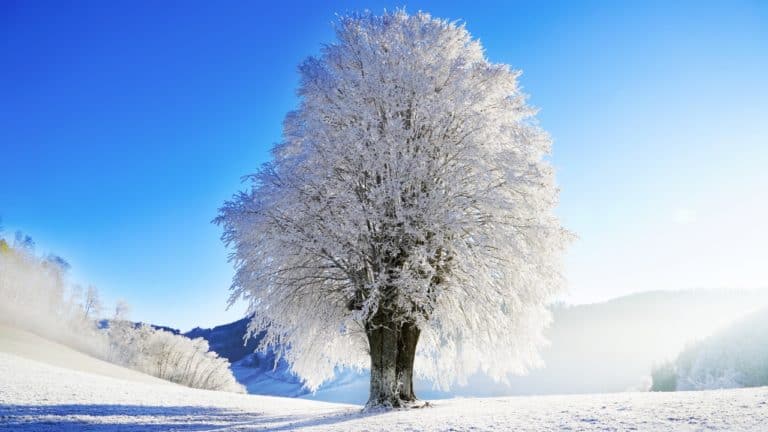
As a young boy growing up in Melbourne, Australia, fall was almost non-existent and winter only meant that I had to wear shoes when playing outside and, occasionally, a parka. It never snows in Melbourne, and a brutal winter day can sometimes go down to the mid-40s. Immediately after I finished high school (in December, the beginning of the summer in Australia) I left to learn in Yeshivas ITRI in Jerusalem, which is where I encountered my first “real” winter. I remember well my first snowball fight, when two students from Chicago defeated an entire mob of five Englishmen, two South Africans and one Australian (me). My initial reaction to winter was not positive: snow, ice and temperatures that only occurred in Australia inside refrigerators, were not amongst my favorite things.
I became more enamored with winter, however, as I matured, When winter arrives, the nights are longer and quieter. For people who study Torah, winter is a period when one can, and should, devote much more time to its study (Bava Batra 121b). In yeshivos, the longest semester is winter. It begins just after Sukkot and continues for five months (and in a leap year, six months!). I remember looking forward to the winter semester as a time when one could really accomplish a lot; finish a tractate, and/or study a particular area of Jewish law in depth and breadth. Five solid months of learning, with long cold evenings throughout, when all you want to do is stay inside and learn. For those not in yeshiva or not involved in Torah study, winter is still a more contemplative, meditative and thoughtful time of year than summer and spring. It is a wonderful time to nurture relationships with Hashem, with people, and with your own soul; on a winter’s night, you can hear yourself think.
Winter is also heavy with symbolism. Many scholars from medieval times to the present day, refer to their youth, as yemei chorfi, which means, “the days of my winter.” (Job 29:4; Ramban, Vayikra 19:20) Generally, in secular literature, youth is associated with summer or spring and old age is associated with winter (e.g. Shakespeare, Sonnets 94, 98). My rebbe, Rabbi Moshe Shapiro, ztz”l, explained the difference in perspective of secular literature and the Torah world. If one’s view of life is materialistic and one sees the purpose of life as harvesting the material benefits of the world, then the time when one can do that the best; eat more, consume more, be the most vigorous – is youth. So youth is harvest time – spring and summer. An older person is not a great “consumer” and so old age is compared to winter, when things are dormant, branches whither and dry out, not much happens – winter is a sad, pathetic time of year, and, of life.
On the other hand, if you look at life with a spiritual perspective then youth is winter. Winter is when plants, trees and animals are storing up energy, absorbing rain, snow-melt and nutrients and putting it away it up to bring forth fruit in summer. When spring and summer arrive, the buds will appear, the flowers will blossom and the fruit will grow. (Rosh Hashana 14a, Rashi ad loc.)
In the Torah’s perspective, old age is the time when the seeds that were watered during the winter of youth, will produce the fruits of life. We harvest the investments of our youth during our old age. Nachas is the fruit that is harvested during summer. Tzidkus and wisdom are the bounties that sprout forth in springtime. We see youth as “the days of winter” because that is not when we were busy “harvesting”, but when we were busy absorbing the nutrients of Torah, prayer and mitzvot. In old age we harvest, and hence it is summertime.
(Article originally appeared in Inyan/Hamodia)
-
Rabbi Mordechai Becher’s VLog – A Little Help From My Friends – Bo 5781
Rabbi Becher emphasizes how the current lockdowns make it even harder for us to see our friends, which is so important because we need our friends in order to get up.
-
Harry’s Video Blog – It’s Not Too Late – Bo 5780
Why did G-d send Moses to Pharoah’s palace when He said He had already hardened his heart? What could possibly be the purpose of the visit?
-
Rabbi Mordechai Becher’s VLog – Kosher Jellyfish – Bo 5780
We are not sure what the average person thinks when he sees the Turritopsis nutricula – the immortal jellyfish – in an aquarium. However, when Rabbi Mordechai Becher sees this amazing creature, he immediately thinks about the Jewish People and their long history.
-

Giving a Donation to Yourself
We are now in the month of Shevat and approaching the onset of spring, heralded by TuBishvat. I would like to discuss some of the unique mitzvot that apply in the land of Israel.
Many of the various tithes and agricultural taxes follow the seven cycle of the the Sabbbatical year, Shemitta. In the seventh year of the agricultural cycle, Shmittah, no new crops are planted and only maintenance work is done on crops and trees that already exist. Farmers may not sell their produce or prevent people (or animals) from entering their fields and consuming the crops. Most commentaries maintain that the primary purpose of Shmittah is to allow everyone equal access to the land, and to have the landowners feel like tenants once in a while. This experience will help them understand that “the earth is the Lord’s” and that the main purpose of life is not the accumulation of possessions. The Sabbatical year also provides an opportunity for hard-working farmers to devote more time to Torah study. The observance of Shmittah fell into disuse during the long Jewish exile from the Land. Today, however, with the establishment of the State of Israel, the return of Jews to their homeland and the increase in Jewish observance among Israeli farmers, there are farms and kibbutzim that strictly observe the Shmittah laws. These farmers spend much of their time during the Shmittah year revitalizing their connection to G-d by studying Torah.
There are tithes that are given to the priests, the Cohanim, to the Levites and to the poor. One of the most interesting “taxes” is called “ma’aser sheni” – the second tithe. This tithe is separated from the crop and the produce (or its monetary equivalent) is taken to Jerusalem and eaten by the landowner and his family and friends in Jerusalem. Now, to me this sounds like a bit of a scam, in which you are giving tithes to yourself!
Rav Avraham Yitzchak Kook explains that since the Jewish people are supposed to be a “kingdom of priests and a holy nation” it is important to remind ourselves regularly of this lofty objective. Therefore, every few years we give tithes to ourselves; we eat them in Jerusalem in purity, holiness and joy acting as if we too are priests, Cohanim. We give ourselves tithes because we are in fact the Cohanim of the world.
-
Harry’s Video Blog – A Slap Upside the Head – Parshat Bo 5779
Harry Rothenberg wonders why was Moses so angry when he left Pharaoh’s palace for the final time?