Author: Rabbi Becher

  • Lag B’Omer 2022 – The 33rd Day of the Omer

    Lag B’Omer 2022 – The 33rd Day of the Omer

    Two significant events occurred on Lag B’Omer (This year beginning at sundown on Wednesday, May 18, 2022), and though separated by many years, they both contribute to its special status. On the thirty third day of the counting of the Omer, Rabbi Akivah’s students stopped dying. Because the epidemic lasted thirty three days, the common custom is to observe thirty three days of mourning in the Omer period, ending on Lag B’Omer, the thirty third day of the Omer. It is also customary to mark the day with certain festive practices.

    Rabbi Shimon bar (son of) Yochai, was the greatest scholar of the Kabbalah (Jewish mysticism) who ever lived. Rabbi Shimon died on Lag B’Omer, and on that day he revealed many of the deepest ideas of the Kabbalah to his students, who recorded his teachings in the book known as the Zohar, the Light. Ancient Jewish custom dictates that on the anniversary of the death of a great scholar, a festival is held in his honor as a means of inspiring people with his lessons and teachings. For hundreds of years on Lag B’Omer, people have gone to the grave of Rabbi Shimon on Mount Meron in the Galilee region of Israel. There they celebrate by lighting bonfires, to symbolize the light of Torah that Rabbi Shimon revealed, and by dancing, singing and studying Rabbi Shimon’s teachings. Today it is common to see people all over Israel celebrating Lag B’Omer with bonfires and singing, while at Mt. Meron itself, thousands participate in the festivities.

  • Is Independence Good?

    Is Independence Good?

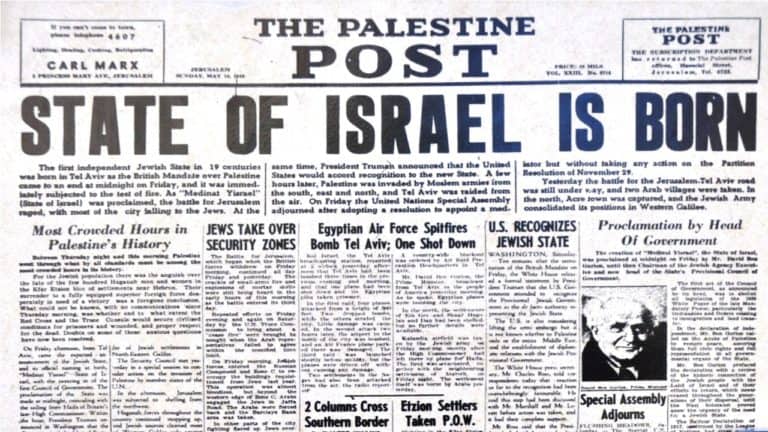
    We will be celebrating the State of Israel’s 74th Independence Day very soon (May 3rd), an occasion for gratitude to G-d and also to the people who sacrificed so much to create a homeland and a Jewish state for the first time in over 2000 years. However, this upcoming event raised a question in my mind, “Is independence a Jewish value?”  It struck me that there are (at least) a number of ideas in Judaism that value independence and dignity.  Maimonides lists eight levels of charity; the lowest is giving someone less than what he needs, after he begs, with an unpleasant demeanor.  The second highest level of charity, is giving anonymously, as much as is needed.  The highest level of charity is giving someone either a job or a loan so that they can support themselves with dignity. The greatest gift that one can give to another person is that person’s independence.

    The Mishnah in Ethics of the Fathers tells us to “teach many students.”  A more literal translation of the Mishnah however, reads, “Cause many students to stand up.”  Some commentaries understand this to mean that the ideal teacher should seek to make himself obsolete and to give his students the ability to stand on their own feet.

    According to Jewish law if a person is not yet dependent on charity, and making a normal Shabbat meal will push him into dependence, it is better that he have a simple weekday meal on the Shabbat than become dependent on charity.

    So it appears clear that independence, dignity and self-reliance are values that are part of Judaism. According to Rabbi Moshe Chaim Luzzatto, the purpose of free-will is in order for the human to become similar to G-d through his own independent decisions.  G-d’s goodness is completely independent and self-determined, so too human goodness is only meaningful if it is result of self-determination and independent free-will decisions. The Maharal points out that one of the great tragedies of the Exile and Diaspora is the fact that the Jews have been under foreign rule and have lacked self-determination, something which, he writes, is the natural state of any nation. In addition, Rabbi Moshe Chaim Luzzatto writes that the “honor of G-d” in this world is linked to the “honor of the Jewish people.”  He maintains that since the Jews are identified as G-d’s people, the honor of G-d is inextricably linked to the status of the Jewish people.

    I believe that when Jews live as second class citizens, as dhimma¸ or confined to a ghetto, or even if they live in prosperity and freedom, but are not the masters of their own destiny, but subjects of others, then there is a diminution of the honor of G-d in the world.  Thus, independence, self-determination, dignity and honor are values that we should not only pursue individually and nationally but that we should cherish and celebrate.

  • Believing In Ourselves

    Believing In Ourselves

    This week is Parshat Va’etchanan, but the Shabbat is actually known as “Shabbat Nachamu,” which means the “Sabbath of Comfort.” It is because we had previously three weeks of mourning for the destruction of the Temple, the exile, and all the subsequent tragedies due to that exile, culminating in the most intense mourning on the fast of Tisha B’av, which occurred this year on Sunday. 

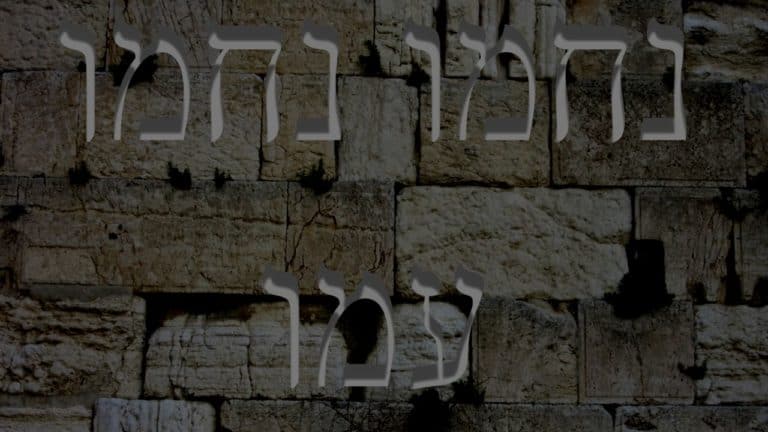
    During the three weeks preceding the 9th of Av there are special sections of the Prophets read in synagogue, known as the “Shlosha D’poranusa” – the three of punishment. These three haftaras of punishment, of rebuke, and of predictions of exile, destruction and diaspora. However, they are followed by the “Shiva d’nechamta” – the seven haftaras of comfort – “nechamta”- to be comforted.  The first of those seven haftaras is from Yeshaya (Isaiah) and it starts with the very beautiful words, “Nachamu, nachamu ami, yomar Elokeichem,” Be comforted my people be comforted, God said. 

    Then it continues, “Dabru al lev Yerushalayim…” speak to the heart of Jerusalem, “v’kiru aleihu” and call to her.  

    Rabbi Shlomo Carlebach asked an interesting question: Here it says, “Speak to the heart of Jerusalem, and call to her.” Now, normally the word “call”, “Vayikra,” comes before speech, “dabeir”. For instance, “Vayikra Hashem el Moshe, Vaydabeir eilav…” meaning, G-d called Moses and spoke to him.” The word “calling” usually indicates someone is distant, and is going to come close. Speaking indicates they’re already close. 

    Very strangely, here the order is reversed. It first says “speak to Jerusalem,” meaning Jerusalem is close and then it says “and call to her” as if she started off close and then backed away, moved away. So Shlomo Carlebach’s answer is very beautiful and very typical of him. His answer is this that one of the problems of our exile, one of the problems of the Jewish people, is we don’t believe in ourselves enough. We don’t believe we have the ability to repent. We don’t believe we have the ability to merit the redemption. We don’t believe we have the ability to be close to God. We don’t believe in ourselves. He says that belief in God we have, but belief in ourselves we don’t have! 

    So when God comes to the Jewish people and he says “Speak to the heart of Jerusalem” and he says, “You are comforted. It is the time of the redemption.” What do the Jews do? They back away! “No! It can’t be us. We’re not worthy of it. We haven’t merited it.” 

    And so then God has to “call” to Jerusalem from far, because Jerusalem has backed away and now Hashem calls to Jerusalem and says, “Don’t worry, nachamu, nachamu ami. Indeed you have the merit. You have the ability you are able to be comforted.” 

    And that’s the basic idea. I think it’s a beautiful concept and it explains also the double expression, nachamu, nachamu. The double expression means, “comfort ye, comfort ye,” but God is saying, “comfort ye” in the sense that I have forgiven you and I have brought you back to the land of Israel and I have redeemed you, and the second “comfort ye” is to be comforted within yourself, and to believe in yourself, and to believe that you have the power of redemption within yourself. 

    So enjoy the Shabbat and may we all merit, “nachamu, nachamu ami.” To have the double comfort of being forgiven and redeemed by G-d, and also forgiving ourselves and believing in ourselves. 

    And through that we will merit the final redemption, and G-d will speak to the very heart of Jerusalem. 

  • Rabbi Mordechai Becher’s VLog – Confusion, Clarity and Purity – Chukat 5781

    Rabbi Becher uses linguistics to connect “confusion” to “impurity” and “clarity” to “purity”. What does it all mean?

    View this video directly on Vimeo.

  • The Thirteen Principles

    The Thirteen Principles

    Now that the month of Tamuz is here, I believe it is an appropriate time to discuss belief, Emunah.  An ideal place to start is Maimonides, who, writing in the 12th Century, was the first Jewish scholar to systematically list and explain the principles of Jewish belief.  His “Thirteen Ikarim,” principles of faith, became the most authoritative formulation and they are studied in Jewish communities around the world. A condensed version of the thirteen principles known as “Ani Maamin,” “I believe,” is printed in all standard prayer books just after the morning prayers.  The twelfth principle, “I believe with perfect faith in the coming of the Messiah…” has been the last words that Jews have sung and recited before going to their deaths at times of persecution.  The beautiful poem, “Yigdal Elokim Chai,” said at the beginning of the morning prayers is also based on these thirteen principles.  The first five principles concern the existence of God and beliefs about His nature.  The next four are beliefs about God’s relationship and communication with the world and the revelation of Torah, and the last four speak of reward, punishment, and humanity’s destiny.  Following are the first two principles, in my translation with a brief synopsis.

    1. The Existence of God

    There is a completely perfect Being, Who is the cause of everything else.  He created everything, everything exists within Him, and all continued existence depends upon Him.  If He did not exist, then nothing else could exist.  However, if nothing aside from Him existed, He would continue to exist as before, without any deficiency, because He does not need anything outside of Himself.  Everything else, whether spiritual or physical, is dependent on Him.  This principle is stated in the verse, “I am the Lord your God, Who took you out of the Land of Egypt.”

    Theme —  We believe that God exists and that He is absolutely self-sufficient, not dependent in any way on human desire, belief or consensus.  This belief is the basis for our dedication to a system of absolute morality and absolute values.  If God is the source of our values, they are not subject to change and cannot be relative.  If morality is a human invention, then it is nothing more than a matter of preference and taste.  As Dostoyevsky’s Ivan says, in The Brothers Karamazov, “If God does not exist, all is permitted.” Throughout history, moral systems created by human beings have been bent and molded to fit convenience and desire.  It is significant, that three of the most ruthless murderers in history, Hitler, Stalin and Pol Pot, were all violently opposed to God and religion.  Judaism maintains that in order to build a consistently moral society our world view must have God at its center.

    1. The Unity of God

    The Creator is One and is totally unique.  His unity is not the same as the unity of a category (e.g. one species, which contains many individual animals), and is not similar to one object or body, which can be subdivided into many parts (e.g. skeleton, organs, limbs, soul, intellect).  His unity is not even the same as the number one, because it too can be divided into smaller and smaller fractionsRather, He is a totally unique Oneness, which cannot be compared to anything else at all.  This principle is based on the verse “Hear O Israel:  The Lord is our God, the Lord is One.”

    Theme —  We are monotheists:  there is only one God and everything in the world is under His control.  Pagans believed in gods of good and gods of evil.  As a result, they did not expect the world to be harmonious or even comprehensible, since every natural power represented a different god and all were competing with one another.  Monotheism, in contrast, sees all of existence as coming ultimately from one source, as the verse in Isaiah states, “[I am the One] Who forms light and creates darkness; Who makes peace and creates evil; I am God, Maker of all these.”  Monotheism taught people to look for uniformity and harmony in the universe.  Albert Einstein pointed out that monotheism, in fact, laid the foundation for all scientific enquiries:

    Science can only be created by those who are thoroughly imbued with the aspiration towards truth and understanding. This source of feeling, however, springs from the sphere of religion. To this there also belongs faith in the possibility that the regulations valid for the world of existence are rational, that is, comprehensible to reason. Without the belief in the uniformity of nature, no theoretical formula of universal character could be established.

    Maimonides’ alludes to a similar idea at the beginning of the Mishneh Torah, “The foundation of foundations and the pillar of wisdoms is to know that there is a Prime Cause that brought everything into existence.”

  • Rabbi Mordechai Becher’s VLog – Hebrew, Israel and the Jews – Korach 5781

    Israeli Archeologist Eilat Mazar died last week. Rabbi Becher connects her finds in the Holy Land with proof  that Jerusalem and Israel belong to the Jews. (Of course, the people who are not interested in the truth won’t care about this.)

    View this video directly on Vimeo.

  • Absolutely!

    Absolutely!

    There is a popular misconception that “Judaism is not a religion of dogma” and that it makes no demands on belief.  However, it is clear from the Torah itself that there are obligations of the intellect as well as obligations of action.

    I am the Lord your God, Who has taken you out of the land of Egypt, from the house of slavery.  You shall not recognize the gods of others in My presence.

    The first two of the Ten Commandments obligate us to acknowledge God’s existence and His involvement in the world, and to deny the existence of any other power.   Every Jew is required to affirm certain truths and to reject falsehood: truth, belief and knowledge are constant themes throughout the Torah.

    In the account of the plagues in Egypt, for example, God repeatedly states that the purpose of the miracles is to demonstrate certain basic truths about His existence.  God brings the first two plagues, “so that you will know that there is none like God, our God.”  After the fourth plague, He says, “so that you will know that I am God in the midst of the land.”  The fifth plague is followed by the statement, “So that you shall know that there is none like Me in all the world.”  The Torah makes it very clear that God’s purpose in performing the many miracles surrounding the Exodus was not simply to free the Jews and punish the Egyptians.  The supernatural events that occurred during the Exodus were designed to be an educational experience (albeit, high-impact) for the Egyptians and for the Jews.  They were a graphic demonstration of the true nature of God.  It is only because God wanted to inform the entire world of certain eternal truths that the Exodus took place in such a dramatic and awe-inspiring way.  God could have accomplished the same results much more easily and efficiently by simply removing the Jews from Egypt and placing them in the Promised Land.

    Nachmanides, the 13th century Jewish philosopher from Spain, elaborates on this point:

    The intent of all the commandments is that we should believe in God and admit that He created us; and that is the purpose of the whole of creation…  And God’s… only desire in this lower world is that humans should know and acknowledge to God that He created us.

    Judaism is predicated upon the belief that there are absolute truths that are accessible to human beings.

    For this commandment that I command you today — it is not hidden from you and it is not distant.  It is not in heaven, [for you] to say, “Who can ascend to the heaven for us and take it for us, so that we can obey it and fulfill it?”  Nor is it across the sea, to say, “Who can cross to the other side of the sea for us and take it for us, so that we can obey it and fulfill it?”  Rather, the matter is very near to you — in your mouth and in your heart — to fulfill it.

    A philosophy of pluralism or moral relativism, which denies the existence of absolute truths, is unacceptable to Jewish thought; the Torah has very definite moral pronouncements, imperatives and laws.  The belief that all truth is relative, however, pervades modern society.  As noted scholar and social commentator, Allan Bloom writes:

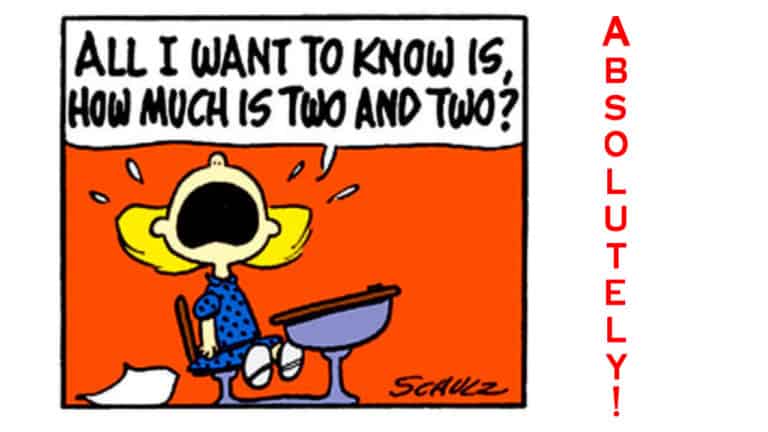
    There is one thing a professor can be absolutely certain of: almost every student entering the university believes, or says he believes, that truth is relative.  If this belief is put to the test, one can count on the students’ reaction: they will be uncomprehending.  That anyone should regard the proposition as not self-evident astonishes them, as though one were calling into question 2 + 2 = 4.  These are things you don’t think about

    Although many people profess to believe that there are no absolutes, when challenged, it is clear that deep down they do accept certain absolutes.  I was once traveling from London to Australia, and at about 3.00 a.m., somewhere over Bandar-Seri Begawan we were served breakfast.  As usual, I was served my kosher meal before anyone else received the regular meal.  My neighbor looked at my elaborately wrapped tray and said, “Kosher food, huh?  Well, I don’t believe in absolute truth!”  I replied, “Are you absolutely sure of that?”  — a retort that usually makes the other party stop and think for a moment.  This time, however, my fellow traveler immediately responded, “Ah, but you are using logic.”

    “If I understand you correctly,” I answered, “you are saying that since you do not accept anything as absolutely true, logic is also in doubt.  Therefore, I cannot use logic to refute you.  Is that your claim?”  He confirmed that I was correct in my understanding of his argument.  “Well,” I said, “That is quite logical.”  At that point he realized that even he does accept certain truths as absolute (such as the validity of certain logical rules) and he quickly ended the conversation.

    Not only is a relativist often self-deluding, he is often intolerant of those who do believe in absolutes.  The late Chief Rabbi of the United Kingdom, Rabbi Jonathan Sacks Ztzl, pointed out that to the same degree that Judaism rejects pluralism, pluralism rejects Judaism:

    Theological, as opposed to political, pluralism presupposes the absence of absolute or normative truth and hence the falsehood of Orthodoxy. Orthodoxy stakes its being on the existence of some truth that transcends the relativities of man. This is the rock on which pluralism founders. Either the Torah is the unmediated word of God or it is not. Either Halachah [Jewish law] commands every Jew or it does not. Either God speaks to us through history or He does not. Where truth and falsity are at stake, the idea that both sides of a contradiction are true is itself a contradiction…  the [literature] on pluralism proceeds on the explicit or hidden premise that Orthodoxy is false. It could not be otherwise, for if Orthodoxy is true, pluralism would be false. But if so, pluralism is no more tolerant than Orthodoxy.  Each represents a way of viewing the relationship between belief and truth, and each excludes the other.

  • Rabbi Mordechai Becher’s VLog – Illiterate Idiots Are Dangerous – Beha’alotcha 5781

    Rabbi Becher wants to know what is worse: A terrorist group masquerading as a government which shots 600 missiles onto its own population; This same group which shoots over 2000 missiles onto civilians; or celebrities and other “influencers” who celebrate these acts of terrorism?

    View this video directly on Vimeo.

  • Simplicity

    Simplicity

    During the months of summer, I often find myself thinking of some of our memorable vacations. One comes to mind as especially enjoyable.  Our family attended a Shabbaton at Kesher Israel congregation in Harrisburg, Pennsylvania, where I was scholar in residence.  The Rabbi, the synagogue and the community were all wonderful, warm, fantastic and incredibly hospitable.

    On the way there we visited the Amish in Lancaster County, took a buggy ride, had a tour of an Amish town and house, and schmoozed with the Amish. On the way back we attended the North East Pennsylvania State Fair. At the State Fair there was, of course,  the world’s largest pig. There were hog races, a demolition derby, monster truck races, and the world’s strongest clown.

    Now, we enjoy music, reading, hiking, museums and art galleries, but, I am not ashamed to admit, we also really enjoyed the State Fair.  We had a great time – we cheered on the hogs in the race, we applauded at cars being demolished, and we sat through the “World’s Strongest Clown” show.  I thought to myself, maybe I am a bit of a snob sometimes; I look down on people because they do not enjoy the same things that I enjoy. Sometimes that “snobbery” prevents us from even trying something that may be enjoyable.  I am not planning on wearing cut-off jeans and getting tattoos or anything like that, I am just saying that we should not let our prejudices get in the way of enjoying things even if they seem unsophisticated.   The Amish were also fascinating and I found myself being impressed with “the simple life.”  As summer approaches, I think that we should consider for ourselves, and try to teach our children, that there are a lot of simple things that we can do that are very enjoyable, do not cost a lot of money, are not commercialized and are very low-tech.

    I think there is a lot to be said for encouraging the Jewish community to pursue a simpler life. The extravagance that one can observe among religious Jews, whether in lavish bar-mitzvahs or weddings, clothing, houses, and cars does not seem to fit with the prophet Michah’s exhortation to “walk modestly with the Lord, Your G-d.”  I like being comfortable, I love gadgets, but there is a lot to be said for simplifying.

    At the State Fair I learnt that you can have a lot of fun for very little money and it may be in a very surprising context.  A family of religious Jews sitting with a whole lot of people who are extremely different, and all whooping it up and having a great time together, gives me some hope for humanity after all.

    Getting back to the Shabbaton, I think that a lot of what Shabbat is about is simplifying life.  We don’t carry our wallets; no credit cards, business cards, driver’s licences, etc. The verse in the Torah states that G-d “shavat vayenafash” which , that G-d rested on the seventh day and rested.  The word shavat means “rested” and “vayenafash” also means “rested.”   Rav Samson Rafael Hirsch has an interesting translation. He translates, vayinafash as “He withdrew into His essence.”  G-d ceased creating, He stopped the expansion mode and withdrew into His essence. On Shabbat every one of us is obligated to cease the expansion mode, the building mode, the acquisition mode and withdraw into our essence, so that on Shabbat our essence is not represented by a wallet, or a cell phone,  but rather by the soul.

    Shabbat is a little return to simplicity. Yes, we have fantastic food, but only go to where we can walk, we don’t buy anything, we don’t sell anything, we don’t use any electronics, and we only communicate by word of mouth.  We appreciate simple things, like eating an uninterrupted meal with the family, singing together, schmoozing, and taking a stroll to nowhere in particular. Shabbos is a simple, but beautiful, staycation. Shabbat Shalom.

  • Institutionalized Insomnia

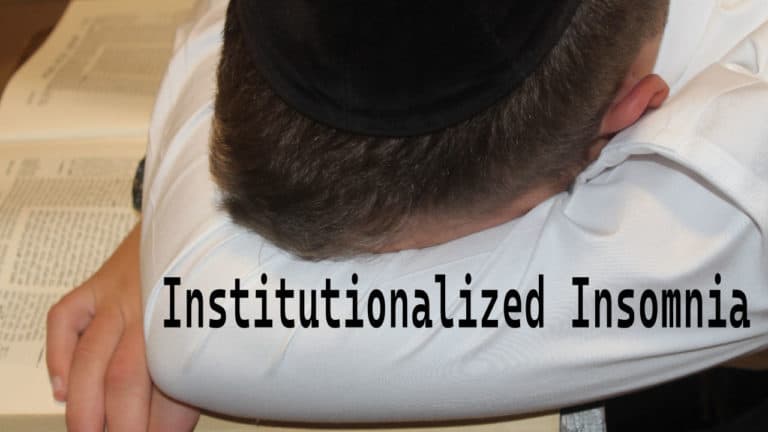
    Institutionalized Insomnia

    The first time that I stayed up learning all night on Shavuos was when I was about 14 years old. We lived in Doncaster, a suburb of Melbourne, Australia and attended a traditional shul, which, until that year did not have a Rabbi.  The shul hired a young Rabbi, an American, Yeshiva University graduate, who had a profound influence on me.  One thing that I recall clearly was Shavuos night learning, something which he instituted in our Shul, when he opened a Mikraos Gedolos Chumash and analyzed a pasuk using a variety of meforshim.  This event literally and figuratively, woke me up, and helped me become aware of the infinite depth and breadth of the Torah, and made me aware of dimensions of Torah knowledge that I did not even know existed.

    After high school I studied in Yeshivas ITRI in Yerushalayim where Shavuos night was a very intense learning experience;  it included a shiur by HaGaon Rav Shlomo Fischer, Shlita, which, in his unique style, was an eloquent, brilliant tour of almost every part of Torah, from Halacha to Kabbalah, and from Neviim Acharonim to the Ketzos HaChoshen.  The night concluded with a large group of us walking to the Kosel for shacharis kevasikin. Walking through the streets of the Old City while it was still dark, seeing the sun rising over the Kosel, and davening together with thousands of others while standing at the gates of Heaven (Teshuvos Chasam Sofer, Yoreh Deah 2:233) was a truly unforgettable and inspiring Shavuos night.

    Years later, when I taught at Ohr Somayach in Yerushalayim I was asked to be scholar in residence for Ohr Somayach in Johannesburg, South Africa for Shavuos. Not having lived in Australia for quite a while I forgot that Shavuos night in the Southern Hemisphere is about 8 or 9 hours long, unlike the puny 4 or 5 hours in the Northern Hemisphere.  In the single most exhausting Shavuos I ever experienced, I delivered eight shiurim on that night  My adrenalin level, however, was quite high, as I gave the first two shiurim in a shul in Savoy Estates and then walked for half an hour to Ohr Somayach in Glenhazel.  Walking late at night in Johannesburg is (so say the least) unsafe; and I believe that I shaved 10 minutes off the record for that walk.  When I arrived in Glenhazel my heart was pounding, my eyes were wide open, and I had no difficulty staying awake.

    Living in the USA and working for Gateways, I have spoken at many Gateway’s seminars, Shabbatonim and Yom Tov programs. At the first two Shavuos programs that Gateways organized, I was enthusiastic, optimistic and perhaps a little too ambitious in what I decided to teach. The first year I gave a four-and-a-half-hour shiur in which we surveyed all 613 mitzvos, admittedly not in great depth, but we finished them all by dawn. The night started with over 100 people at the shiur and by the end I had a minyan of attendants, half of them comatose. The next year I decided to teach the entire Maseches Tamid, 8 and a half blatt, in one night. B”H we finished the Masechta and made a siyum at kiddush but based on the attrition rate and consciousness of the participants I decided to go back to one-hour shiurim on topics of more universal appeal.

    Last year was a challenging Shavuos.  Most Shuls were not yet open, seminars were not happening, and our family was “home alone.”  I am not sure how much coffee I consumed that night, but I think I may have single-handedly impacted the world coffee supply and interrupted my sleep cycles for the next week.

    BeEzras Hashem, this year we will have a more normal Shavuos, with shiurim, chavrusas and programs. Whatever it is that keeps you awake – an inspiring Rabbi, a brilliant shiur, a death-defying walk, ambitious goals, or caffeine – you will be joining Klal Yisroel around the world and throughout history in re-accepting and receiving Torah from Sinai. Have a wonderful, joyful and inspiring Shavuos.