Tag: בהעלותך

  • Harry’s Video Blog – Fresh Snow – Parshat Beha’alotcha 5782

    Why does the phrase “Children of Israel” appear 5 times in the same passage (Numbers 8:19)?

    View this video directly on Vimeo

  • Harry’s Video Blog – Please Pass the Cucumbers – Parshat Beha’alotcha 5781

    One year without your pillow or one year without your favorite food: which would you choose?

    View this video directly on Vimeo

  • Rabbi Mordechai Becher’s VLog – Illiterate Idiots Are Dangerous – Beha’alotcha 5781

    Rabbi Becher wants to know what is worse: A terrorist group masquerading as a government which shots 600 missiles onto its own population; This same group which shoots over 2000 missiles onto civilians; or celebrities and other “influencers” who celebrate these acts of terrorism?

    View this video directly on Vimeo.

  • Simplicity

    Simplicity

    During the months of summer, I often find myself thinking of some of our memorable vacations. One comes to mind as especially enjoyable.  Our family attended a Shabbaton at Kesher Israel congregation in Harrisburg, Pennsylvania, where I was scholar in residence.  The Rabbi, the synagogue and the community were all wonderful, warm, fantastic and incredibly hospitable.

    On the way there we visited the Amish in Lancaster County, took a buggy ride, had a tour of an Amish town and house, and schmoozed with the Amish. On the way back we attended the North East Pennsylvania State Fair. At the State Fair there was, of course,  the world’s largest pig. There were hog races, a demolition derby, monster truck races, and the world’s strongest clown.

    Now, we enjoy music, reading, hiking, museums and art galleries, but, I am not ashamed to admit, we also really enjoyed the State Fair.  We had a great time – we cheered on the hogs in the race, we applauded at cars being demolished, and we sat through the “World’s Strongest Clown” show.  I thought to myself, maybe I am a bit of a snob sometimes; I look down on people because they do not enjoy the same things that I enjoy. Sometimes that “snobbery” prevents us from even trying something that may be enjoyable.  I am not planning on wearing cut-off jeans and getting tattoos or anything like that, I am just saying that we should not let our prejudices get in the way of enjoying things even if they seem unsophisticated.   The Amish were also fascinating and I found myself being impressed with “the simple life.”  As summer approaches, I think that we should consider for ourselves, and try to teach our children, that there are a lot of simple things that we can do that are very enjoyable, do not cost a lot of money, are not commercialized and are very low-tech.

    I think there is a lot to be said for encouraging the Jewish community to pursue a simpler life. The extravagance that one can observe among religious Jews, whether in lavish bar-mitzvahs or weddings, clothing, houses, and cars does not seem to fit with the prophet Michah’s exhortation to “walk modestly with the Lord, Your G-d.”  I like being comfortable, I love gadgets, but there is a lot to be said for simplifying.

    At the State Fair I learnt that you can have a lot of fun for very little money and it may be in a very surprising context.  A family of religious Jews sitting with a whole lot of people who are extremely different, and all whooping it up and having a great time together, gives me some hope for humanity after all.

    Getting back to the Shabbaton, I think that a lot of what Shabbat is about is simplifying life.  We don’t carry our wallets; no credit cards, business cards, driver’s licences, etc. The verse in the Torah states that G-d “shavat vayenafash” which , that G-d rested on the seventh day and rested.  The word shavat means “rested” and “vayenafash” also means “rested.”   Rav Samson Rafael Hirsch has an interesting translation. He translates, vayinafash as “He withdrew into His essence.”  G-d ceased creating, He stopped the expansion mode and withdrew into His essence. On Shabbat every one of us is obligated to cease the expansion mode, the building mode, the acquisition mode and withdraw into our essence, so that on Shabbat our essence is not represented by a wallet, or a cell phone,  but rather by the soul.

    Shabbat is a little return to simplicity. Yes, we have fantastic food, but only go to where we can walk, we don’t buy anything, we don’t sell anything, we don’t use any electronics, and we only communicate by word of mouth.  We appreciate simple things, like eating an uninterrupted meal with the family, singing together, schmoozing, and taking a stroll to nowhere in particular. Shabbos is a simple, but beautiful, staycation. Shabbat Shalom.

  • Harry’s Video Blog – Second Chances – Parshat Beha’alotcha 5780

    The Passover offering is the only commandment in the Torah that offers a “second chance”. What can we learn from this second opportunity?

    View this video directly on Vimeo

  • Rabbi Mordechai Becher’s VLog – Independence is a Torah Value – Beha’alotcha 5780

    Rabbi Mordechai Becher connects the lighting of the Menorah in the Tabernacle with the teaching of a child – we want both to be independent.

    View this video directly on Vimeo.
  • Tactical Mitzvot

    Tactical Mitzvot

    A great rabbi once said that it is easier to memorize the entire Babylonian Talmud than to change one character trait.  Self-improvement is one of the greatest and most difficult challenges that a person faces.  How does one go about overcoming a negative trait?

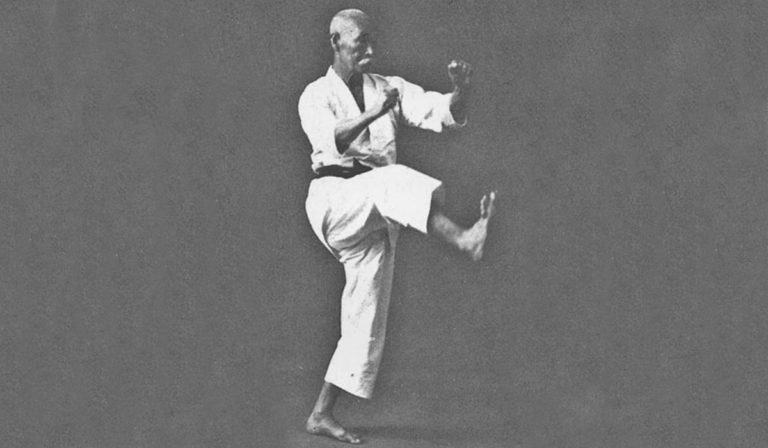
    The answer was supplied by my karate teacher many years ago (when I was fit and flexible).  He said, “Always attack where the opponent is weakest.” The same logic motivated Winston Churchill to attack Italy which he called, “the soft underbelly of the Axis.”  Of all the manifestations of a particular character trait, the easiest to change is action; it is our weakest opponent.  Speech, thought and emotion are extremely difficult to control, but most people are able to control their actions with relative ease.  According to our martial arts principle, this should be the focus of our efforts toward self-improvement.  It is in the field of action that we will find the least resistance and therefore have the most chance of success.

    In addition to tactical considerations, the focus on action is based on a psychological principle formulated over 500 years ago by a great Jewish philosopher, the anonymous author of Sefer Hachinuch, The Book of Education. He was asked why there are so many commandments commemorating the Exodus from Egypt: we eat matzah and bitter herbs, drink wine, relate the story of the Exodus, clean the house to remove all leavened products, recite blessings and prayers, etc., etc.  Would it not have been sufficient for God to simply command us to remember the Exodus?

    His reply is fundamental to understanding Judaism’s emphasis on actions and concrete mitzvot.

    Know that a person is affected by his actions, and his feelings and thoughts always follow the actions in which he is engaged, whether good or bad.  Imagine a person who is completely evil in his heart and who only contemplates evil all day.  If such a person is inspired to change and engages diligently in fulfilling the commandments of the Torah, even if not for the sake of Heaven, he will immediately incline towards good.  And with the power of his actions he will slay the evil inclination — for the heart follows the actions.  Imagine a righteous person, with pious and upright feelings, who engages in actions of folly and evil continuously…If he is engaged in actions of evil continuously, eventually they will influence his thoughts and feelings and he will become an evil, corrupt person — for, as we know, the person is affected by his actions.

    The commandments of the Torah train us to become better people by focusing on our actions more than our thoughts and feelings.  The act of giving charity, for example, makes the person into more of a giver every time it is done.  Thinking and meditating about giving will not necessarily make a person more generous, but the act of giving will inevitably create this effect.  Saying blessings to express appreciation to God for everything that we receive instills in us the attribute of gratitude.

    Even mitzvot that appear to focus on our relationship with God can also have an impact on our ethical behavior in the world.  Stopping work to observe the Sabbath, no matter how important or profitable that work may be, teaches a crucial lesson.  Financial success is not the ultimate value in life; we will not do “whatever it takes” to get ahead.  Each week we train ourselves to exercise self-control and to consider the moral impact of our actions.

    Perfection of the self is an evolutionary process, using small incremental steps to improve.  Every step in the right direction is a step in building the self, and no action is insignificant in this endeavor.